Blogia

ptqk_blogzine

Letters from Beirut


Desde Nextgenderation

CHARLIE ROSE:   Thank you.  Undersecretary for political affairs at the
State Department.  We`ll come back and we`ll hear from Rami Khouri, who is
a Palestinian Jordanian and who is in AmmanJordanand will talk to us by
telephone.  Thank you again.  Back in a moment.
There`s been a lot of focus on people trying to get out of Lebanon, but
there are also people who`re trying to return to their country.  One of
those is Rami Khouri, editor-at-large of the newspaper the "Daily Star."
He joins me now by phone from Amman, Jordan.  Thank you for doing this.
RAMI KHOURI:   My pleasure.
CHARLIE ROSE:   I have two big questions.  Number one, do you think the
Israelis, if they continue these attacks will be successful in doing great
damage if not destroying the capabilities of Hezbollah?
RAMI KHOURI:   I am pretty certain that they will fail in doing that, and
the reason I say that is because they`ve tried this three or four times
with various groups in Lebanonand failed.  Over the last 25 years, they did
it with the Fatah guerillas in the late `60s, they did with the PLO in the
`70s, they did it with Hezbollah five -- 10 years ago.  They occupied south
Lebanonfor almost 20 years.  They had free fire zones.  They had no-go
zones, they had red lines, blue lines, green lines.  Killing zones.
Interdiction zones; international troops.  They tried every possible trick
in the book.  They even funded an armed - a surrogate army in south
Lebanon.  Every single thing they have tried, including long-term military
occupation, has failed.  And the reason it has failed is that you cannot
provide a military solution to a political problem.  And you cannot win
with overwhelming military force against a determined guerrilla group
fighting for its national sovereignty and its human dignity.  This is a
lesson that every major military power in the world has learned and the
Americans learned it in Vietnam.  The Russians in Afghanistan, the French
in Algeria, the Americans are learning it again in Iraq.  And the Israelis
are obviously not learning it over and over and over in Palestineand
Lebanon, so it will not succeed.  There`s no question about that.
CHARLIE ROSE:   Why do you think the Israelis have not learned the lesson
you think they should have?
RAMI KHOURI:   I think Israelfundamentally as a nation has never been able
to come to grips with two central notions in its modern history.  One is
the idea of a viable legitimate Palestinian state, and the other one is
with the nature and the identity of Arab national identity, which also
includes national identity in Lebanonfor the country of Lebanonitself.  The
Israelis have been so obsessed with the idea of their own security and
certainly, you know, rightly so, given their modern and ancient history of
being persecuted and subjected to pogroms and holocausts.  But they have
allowed their over-focus on their security to blind them to the fact that
they can never have security if their neighbors don`t have it.  And I think
this has been an irrational strain in - in modern Zionism.  And
unfortunately, the irrationality seems to have expanded into the White
House now as well.
CHARLIE ROSE:   I`ll come to that in a moment.  It seems - because Nick
Burns is on our show tonight.  It seems to me that the Israelis or I would
assume the Israelis will argue that we were prepared to make a giant
bargain at Camp David when, first, with Sadat and then later with Yasser
Arafat and Ehud Barak.  It didn`t happen.  We were prepared to take - to
retreat from and withdraw from Gaza; we were prepared to try to create
boundaries by withdrawing.  We had plans on the board for withdrawing from
the West Bank.  But Palestinians could not control -- this is not
Hezbollah.  Palestinians could not control the most extreme elements within
their population who continued to assault us across their border.
RAMI KHOURI:   Well, I think that is - that`s a pretty good representation
of - of Israeli spin.  But it is not an accurate reality of the politics
and the nationalism and the forces on the ground in the Middle EaSt.
The reality is that the Israelis most recently did unilaterally withdraw
from south Lebanon and from Gaza, but unilateral withdrawals do not bring
about peace if you don`t negotiate the peace settlement that responds to
the legitimate - and I stress the word legitimate -- needs of both sides.
So just pulling out of Gaza, while continuing to expand settlements in the
West Bank, assassinating Palestinians, surrounding Gaza, destroying the
airport, blockading the seaport, controlling the entry points, suffocating
the population, I mean all the things that Israel continued to do to make
Gaza unviable made this inevitable.
So, there was -- and the same thing pulling out of south Lebanon certainly
solved one part of the problem, which was the direct Israeli occupation,
but the occupation of south Lebanon was a function of a wider
Palestinian-Israeli and Arab-Israeli conflict that has been going on since
1948.
There is a solution; there is a diplomatic and peaceful solution that
responds to the needs of the Israelis and to the surrounding Arab
countries.  The Israelis have never attempted that, which is to enter into
a peace negotiation that genuinely and legitimately and legally responds to
the simultaneous needs of the Arabs and the Israelis.  The Israelis have
been focused primarily on Israeli security.  And it`s understandable from
their point of view, but it is not a recipe for a peace treaty.
And so if they want to -- and we`re at the same position again.  They keep
-- I mean, the words they`re using now are surrealistic in terms of
repeating what they`ve said so many times before, that they want to destroy
Hezbollah`s infrastructure, they want to push them back from the border,
they want to make north Israel secure.  They said that three or four or
five times in the last 20 years and have never been able to achieve it.
The response has been that the Hamas and Hezbollah and the Iraqis a few
years ago developed long-range missiles and just sent them over the
security zone.  So there is no security in geography or the occupation or
the pulverizing your neighbor.  The solution is to engage the Lebanese and
the Palestinians and the other relevant Arabs -- in this case Syria
primarily and the Lebanese government-- to engage them in a truly
comprehensive peace negotiation this takes away the root cause of these
problems of the last 30, 40 years, which is the Israeli-Palestinian
conflict.  They got close to it at one point at Camp David, but they never
really got to the root cause, which was the original cause of the `48 war,
the Palestinian refugees, the statelesness of Palestinians.
CHARLIE ROSE:   The right of return and all of that.
RAMI KHOURI:   Well, I didn`t use the word right of return on purpose
because it`s a red flag.  What I`m talking about is...
CHARLIE ROSE:   The red flag for the Israelis or the red flag for the
Palestinians?
RAMI KHOURI:   For the Israelis.  It would drive them nuts.
CHARLIE ROSE:   Right, OK.
RAMI KHOURI:   What I`m talking about is U.N. resolutions, legitimate
international law, complying with Security Council resolutions.
I mean, it`s very ironic that Israel and the Bush White House now -- and I
assume Nick Burns will say this as well -- say well, all they want is the
implementation of Resolution 1559 of the Security Council.
CHARLIE ROSE:   I`m sure.
RAMI KHOURI:   Well, that`s fine.  I accept that.  But you can`t choose the
Security Council resolutions that you want.  If you -- and I`m saying let`s
apply 1559.  Hezbollah is perfectly happy to apply 1559, but only if we
apply the other U.N. resolutions, which call for Israel to stop Jude-izing
Jerusalem, expanding its settlements, subjugating the Palestinians to a
terrible ordeal, annexing the Golan Heights.
Security Council resolutions are not boxes of cereal on a supermarket
shelf, where you choose the ones you like and you leave the ones you don`t
like.  So what we have never had in this process is a diplomatic
negotiation that is based on the principle that the Israelis and the Arabs
have identical and simultaneous rights.  If we can get to that point -- and
I think we can -- I`m still an optimiSt. There`s not many of us left in
this region, but I still think you can negotiate a kind of Arab-Israeli
peace that gives the Israelis what they deserve and what they want, which
is security and recognition in their own Jewish majority state, but you`ve
got to give those same things to the Palestinians and the Lebanese and the
Syrians and everybody else.
CHARLIE ROSE:   But let me ask you this.  Why do you -- because I want to
come to more of -- put this thing in the context of history which you have
been doing, of history in a different way.  But you are constantly saying
that the Israelis and the Palestinians and the Arabs have to negotiate on
an equal basis and understanding the respective rights of each other.  And
that`s the way you get to a two-state solution.  I`m not sure Hezbollah and
Hamas wants a two-state solution.
RAMI KHOURI:   Well, my sense is -- and unlike American diplomats who don`t
even talk to these people, let alone engage them in negotiation, my sense
living here and knowing Hezbollah and Hamas and all the other groups for
many years, my sense is that these are relatively pragmatic political
organizations.
These guys didn`t exist 20 years ago.  Hezbollah and Hamas did not exist 20
years ago.  So where did they come from?  They didn`t come from the moon.
These are political responses to populations that have been degraded and
occupied and bombed and killed and humiliated repeatedly by the Israelis,
and often with the direct or indirect acquiescence, or, as we see now, the
direct support of the United States.
So my sense that we have to go back to the root.  We have to keep going
back to the root cause, which is the Palestinian-Israeli conflict.  If you
have a negotiation that responds to the needs of both sides, my own feeling
is that Hezbollah and Hamas will be pragmatic and will in the final
analysis accept the peace agreement that responds to their needs, their
people`s needs, that`s rooted in international law and U.N. resolutions.
And most importantly, these are political organizations that are
accountable to their own people.  So if the majority of Palestinians, which
is the case, say they were prepared to live with an Israeli state in peace
and recognition, Hamas ultimately will accept that.  There`s no doubt about
it.  And they`ve shown some clear signs of this or at least signals about
this.  But they`re not going to do it unilaterally.
CHARLIE ROSE:   All right.  Tom Friedman, a columnist that you know, wrote
a piece today -- and I`m going to read you the first paragraph, because I
have a follow-up question.  "Profiles of the Hezbollah leader Hassan
Nasrallah always describe him as the most brilliant or strategic Arab
player.  I beg to differ.  When the smoke clears, Nasrallah will be
remembered as the most foolhardy Arab leader since Egypt`s Gamal Nasser
miscalculated his way into the Six-Day War."  Do you share that view or
not?
RAMI KHOURI:   Generally, I don`t share that view, but we really can`t make
a verdict.  We can`t give a verdict until we see what happens in the
current fighting and in the months and years ahead.
I know Tom Friedman well.  He`s a friend.  I respect him greatly.  I think
his analysis of the Middle East for years and years was actually quite
incisive and brilliant, but I think he`s actually wrong on this point.
I think the general tendency in Israeland in the American political
establishment is to fundamentally and almost completely misunderstand,
misdiagnose the significance of Hezbollah and Hamas and the wider Islamist
movements that are now winning elections all over the Middle EaSt. And not
just in the Arab world, but in Turkeyand Pakistanand other places.
I think there`s a fundamental misreading of who these people are, what they
represent, why they came into being, what they want and what they will
agree to negotiate for.  And of course, most of the Arab leaders are also
making the same mistake.
I`m not saying that Hezbollah and Hamas are wonderful groups.  I have a
strong criticisms of some of the things they do.  But I think I understand
them correctly for what they are, which is an organic, natural response
from Arab societies and political cultures and countries and populations
that have been repeatedly degraded by Israeli occupations and attacks, and
also let down by established Arab political leadership.
So these groups emerged finally in the last 15 years as very serious, very
effective in many cases resistance movements.  Remember, these are
resistance movements.  They`re not proselytizing religious groups.  They`re
not mainstream political parties.  They`re resistance movements that are
fighting for their national liberation and their national dignity.  If they
can achieve their goals of liberation, my suspicion is that they will
strike a pragmatic deal ultimately and co-exist with Israel, but only if
Israel in return gives the Palestinians and the other Arabs, Lebanese,
their rights as well.  Statehood, security, sovereignty.  And that requires
solving the original 1948 Palestinerefugee issue.  You can`t get away from
it.  It`s the core issue.  And because we haven`t solved it over the last
50 years, this is what we`ve ended up.
CHARLIE ROSE:   What is the national liberation that Hezbollah is dedicated
to?
RAMI KHOURI:   The liberation of all the territoryof Lebanon.  They are
also...
CHARLIE ROSE:   From whom?
RAMI KHOURI:   From Israel.  And they are also committed to having
Israelstop other propagations as well.
Let me just answer the question.  There are several things that Hezbollah
wants, which I think many other people want.  They make to make sure that
every inch of Lebanonis liberated, because there are still some territories
that are disputed.  They want the prisoners that Israeltook from Lebanonto
be returned.  They don`t want Israelto keep threatening Lebanonwith
overflights and attacks.  And they are also in solidarity with other Arabs
who are fighting Israel, like Syria, like the Palestinians.
But I`m saying that my personal sense is that if there is a comprehensive
negotiation, that these Islamist groups ultimately will co-exist with an
Israeli state.  They won`t love it.  They won`t be very happy about it
perhaps in the first instance, but like the Americans finally came around
and accepted what they used to call red China, now they call the People`s
Republic of China -- people change.  People evolve.
You have to see these groups as political movements.  And you have to see
their political grievances and their political demands, and respond to
those, and not to trump up Israeli spin and propaganda, which unfortunately
has permeated the American political establishment.
CHARLIE ROSE:   All right.  Having said all of that, and you help us with
the context, where do you think Israel`s actions this time -- will it be
viewed as an historic moment in which Israel overextended itself, and in
the act of pursuing Hezbollah destroyed too much of Lebanon and never was
able to overcome these events of the last few days?
RAMI KHOURI:   Well, I think Israelhas clearly repeated the excessive use
of its military force, especially against civilian and infrastructural
targets.  I mean, when they go around bombing roads and bridges and power
plants and civilians and families and trucks, and stuff that is clearly not
related to any kind of security threat, I think this is doing what they`ve
done before, but they`ve done it in a much more vicious way this time,
because the aim is to so pulverize Lebanon that the Lebanese people turn
against Hezbollah.
The reality is that it`s probably not going to work.  Now, if they -- it`s
possible that they might actually be able to hit most of Hezbollah`s
capabilities.  My guess is that that is not going to happen.  Hezbollah has
been prepared for this for many years.  They have proved themselves over
the years to be extremely effective in military resistance and attacking
Israel.  And you know, here they are eight days after Israelstarted, and
they`re still firing missiles all over northern Israel.  The Arab countries
collectively were defeated in seven days in 1967.  But here you have Hamas
and Hezbollah still firing rockets into Israel.
Some people, of course, will say, well, this is because these guys just
want to kill all the Jews.  Well, that`s not correct, in my view.  I think
these guys want to hit back against an Israeli state that has humiliated
and occupied them for years and years and has been destroying their
countries.
And it`s no accident that Israel simultaneously now has destroyed civilian
airports in Beirut and in Gaza, knocked out power plants and destroyed
governments.  And one of the reasons that the Lebanese government is so
weak and why Hezbollah has become so strong is precisely because for the
last 25, 30 years since the late `60s, Israel has been repeatedly bombing
and shelling and killing, displacing Lebanese and destroying the national
economy, to weaken the Lebanese government so much so that there is no
Lebanese government, effectively.
And people will not live in a vacuum.  So you`ve got these resistance
movements that have developed and have not only support in their own
countries, even though some people, of course, criticize Hezbollah for
doing what they did and for triggering this massive Israeli assault, but
there`s strong support for Hezbollah in Lebanon.
More importantly and I think more worryingly for Israel and the U.S. is
there`s now much, much stronger public opinion support all over the Arab
world for Hezbollah and Hamas.  And this is a catastrophe for Israeland
particularly for the United States.
CHARLIE ROSE:   Notwithstanding what the Saudis and the Egyptians have said
in criticizing the Hezbollah?
RAMI KHOURI:
Well, the Saudi and the Egyptian governments are not fully representative
of their people, I would argue.  I think these are governments that have
mixed credibility at home.  And of course, they say these things, and the
Jordanian governments and others, because they`re very worried about this
expanding wave of Islamist political sentiment.  Even through democratic
political elections, Islamist groups are winning -- Muslim Brothers and
Hamas and Ebola -- and this terrifies the Saudi and Jordanian and Egyptian
and other governments, so this is -- of course they`re going to say this.
They`re also worried about links now with these groups with Iran.
So -- but I think what the governments of these countries say is not
necessarily what the majority of their people think.  And this is one of
the phenomena that I think people in Israeland the United Stateshave
completely misunderstood.  The widespread public opinion, support in the
Arab countries, as well as many other countries around the world, the
support for Hezbollah and Hamas in standing up to Israel and delivering the
punishment that they are -- I mean, you know, most of the -- the top third
of Israel, the population of the third of -- the northern third of Israel
has been living in bomb shelters for the last two or three days.  This is
not happy sight for Israelis clearly, but for the first time, you have a
balance of civilian terror.
CHARLIE ROSE:   Well, they say that`s why they`re trying to wipe out
Hezbollah, because Hezbollah has -- I`m going on too long, but that`s why
they`re trying to wipe out Hezbollah, because Hezbollah has that capability
because of its support and encouragement of Syria and Iran whose very
missiles it is launching into Israel.
RAMI KHOURI:   Well, the reality is that Hezbollah has developed these
capabilities and widespread public support in response to the fact that
Israelhas been bombing and terrorizing civilians in Lebanonfor the last 25
years.  I mean, you have to understand the real cause and effect in this
situation.  We`re at a situation now where for the first time probably
since Saddam Hussein lobbed his missiles into Israel in the war back in
what was it..
CHARLIE ROSE:   `91.
RAMI KHOURI:   ... `91.  For the first time, you have widespread fear among
civilian populations in northern Israeland possibly in other places in
Israelto come.
I don`t say this with any glee.  I say this with great sadness.  I mean,
this is a tragedy that you have now Lebanese, Palestinians and Israelis all
suffering the consequences of this cycle of militarism and barbarism.  So
this is a cycle that we have to understand it as a war between two
different people.
The Israelis are trying to project this as peace-loving Israelmaking all
these brave, bold gestures, and the Arabs just want to kill it.  What
happened to the last, you know, 30 years of Israeli occupation and
subjugation and killing of Palestinians and Lebanese?  Do we just forget
about that?  We don`t forget about it.  History doesn`t work like that.
Human nature doesn`t work like that.
People finally in Palestineand in Lebanondeveloped resistance movements
that stand up to the Israelis and deliver some punishment, even though
they`re small pinpricks maybe, a missile here and a kidnapping soldier
there.  But it has developed a certain amount of deterrence, these two
groups have developed a certain amount of deterrence, that I think has
driven the Israelis mad.  They simply cannot handle this, other than with
their military punishment.
CHARLIE ROSE:   OK, Rami, I have to go, but I thank you so much.
RAMI KHOURI:   All right.  Glad to talk to you.  And I hope you`re well.
How is your health?
CHARLIE ROSE:   Much better.  Thank you for asking.  Much better.
RAMI KHOURI:   All right.  Take care of yourself.  Bye-bye.
CHARLIE ROSE:   Rami Khouri from Amman, Jordan, who lives in Beirut, where
he`s editor at large of "The Daily Star."
Thank you for joining us.  See you next time.
Content and Programming Copyright 2006 Charlie Rose Inc. ALL RIGHTS
RESERVED. Transcription Copyright 2006 Voxant, Inc. ( www.voxant.com <http://
www.voxant.com/> ),
which takes sole responsibility for the accuracy of the transcription. ALL
RIGHTS RESERVED.  No license is granted to the user of this material except
for the user`s personal or internal use and, in such case, only one copy
may be printed, nor shall user use any material for commercial purposes or
in any fashion that may infringe upon Charlie Rose and Voxant, Inc.,
copyrights or other proprietary rights or interests in the material. This
is not a legal transcript for purposes of litigation. 


Menos mal que tengo internet, sino pensaría que el acontecimiento del año es julian muñoz....


Electronic Lebanon es un espacio virtual de información sobre Oriente Medio que desde el 12 de julio dedica una cobertura especial a los ataques de Israel contra el Líbano.


Lebanon updates: weblog de canal de televisión libanesa NewTv con noticias diarias sobre los ataques


Al Jazeera:
"In the new period, our bombardment will not be limited to Haifa ... If matters develop, we will choose the time when we will move beyond, beyond Haifa" Sayyed Hassan Nasrallah, the Hezbollah leader

Beirut Indymedia
"Keep bombing guys!": ''White House officials said President Bush remains opposed to an immediate cease-fire to stop violence in the Middle East, despite personal pleas from ally Saudi Arabia that he help stop the bloodshed.''

Siege of Lebanon: un blog para suministrar información sobre la situación en el Libano

Beirut crossing: fuentes, cronicas y links_ en castellano

Blogging Beirut información práctica actualizada

Entrevista a Ghassan Makarem sobre la labor de las organizaciones humanitarias en el terreno_ en radio4all

Letters from Libanon _From: Rasha To: Avi To: Gregory

Letter to Palestinian and Lebanese filmmakers from Israeli filmmakers

>>>> kip blogin´ >>>>>

A new free and live show

Hoy Viernes 14 de Julio a las 21:00 horas Barcelona (= GMT+1)
RADIOPACA.NET
A NEW FREE AND LIVE SHOW 
¡un programa en vivo sobre la situación, un especial divertido y potente! 
TOTES SOM RADIO PAKA
Escolta'ns aqui >> http://www.radiopaca.net 

TOTES SOM PAKES. Segundo comunicado (un poco de historia...)

¿Qui som?

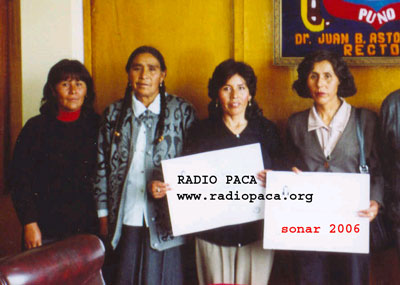
Les paques som un col:lectiu de dones en divers. Algunes som llatinoamericanes, altres europees, africanes, altres de ninguna part, algunes hem nascut a la ciutat, altres ens hem criat en petits pobles, algunes provenim de classe social acomodada i altres varem néixer en el si de famílies pobres. A moltes ens agraden altres dones, a unes altres ens agraden els homes, i algunes ens es igual o anem tan ràpid que ni temps tenim de saber el que ens agrada. La majoria som bífides, parlem al menys dos llengües. Algunes tenim càrregues familiars i altres no. Precàries o surfejant la precarietat. En resum, no tenim por tenim gana.


¿Llavors que ens uneix?

De totes maneres, tenim una visió comú de comunicació feminista: pluralíiiiiiiiiiiissim. Ens agrada divertir-nos, aprendre, riure, erotitzar-nos, cometre errors, generar contingut innovador, preguntar-nos qui som, navegar i sonar-nos suport. No ens fa por assumir les contradiccions de ser feminista. ¿Soc una privilegiada amb respecte a altres dones? Possiblement si, altres més , altres menys, pero no vaig a suicidarme per això ni a ocultar-ho. A vegades somo burgeses i mengem hamburgueses.


¿Cóm sorgeix el projecto Ràdio Paca ?

Radio Paca es un medi de comunicació lliure, associatiu, autogestionat i participatiu que existeix des de el 8 de març de 2005. Ràdio Paca sorgeix com una iniciativa d'un grup de dones amb experiències variades pero en general entorn al mon de la comunicació alternativa i feminista. El grup gestor el formaven dones que havien estat vinculades a Ràdio Contrabanda, activistes del col·lectiu Les Pénélopes i dones professionals de la comunicació amb ganes de crear un medi que els hi aportés més llibertat. Aquest grup inicial de 8 dones varen el·laborar una proposta de realitzar una ràdio feminista que la van anomenar Ràdio Paca al Centre de Cultura de Dones Francesca Bonnemaison (de les 8, 7 encara es mantenen en el projecte de la ràdio). L'apertura d'aquest centre amb uns recursos destinats a la producció cultural de les dones i fruit de la reivindicació dels moviments feministes es constituía com una oportunitat de trobada i de treball col·laboratiu per a fer possible la creació de la ràdio. El projecte es va presentar al Centre de Cultura de Dones Francesca Bonnemaison i la Junta Directiva el va aprovar. Aquest projecte inclou una justificació del perquè una ràdio feminista, explica la metodologia de funcionament de la ràdio i la relació amb el Centre de Cultura de Dones. El projecte es pot consultar en el Centre de Cultura de Dones o demanar-lo a través del nostre correu electrònic.

Desde la seva creació s'han anat sumant mes i mes dones a fer les seves programacions, amb o sense coneixements de ràdio, mes teckis o menys teckis, pero el denominador comú ha estat el de generar un espai de formació i intercanvi per prendre el medi i fer-te'l propi. En aquest any i mig de funcionament assembleari hem creat un espai on les dones poden exercir el seu dret a la comunicació entenent la comunicació com una eina de transformació social.

El Dret a la Comunicació es un dret bàsic reconegut per a la Plataforma de Dones de Pequín i es una reivindicació constant del moviment feminista a nivell planetari. El tancament de la ràdio l'interpretem com una vulneració dels nostres drets fonamentals. Ens han tallat la paraula, sense diàleg, amb coerció.


¿Cóm s' ubica en el Centre de Cultura Francesca Bonnemaison?

Una part del contingut del projecte APROVAT pel Centre de Cultura de Dones es:


"EL MODEL DE RADIO QUE VOLEM:

La ràdio que es planteja respon a una tipologia d'emissora associativa sense finalitat de lucre ni vinculació a les institucions públiques.

RELACIÓ DE LA RÀDIO AMB EL C.C.D.F.B:

Relació de suport i de recursos:

Proposem una formula de gestió dels recursos mixta. Es a dir que si be la ubicació física de la radio serà al CCDFB; la ràdio generarà els seus propis recursos per a gaudir d'una gestió concertada amb el Centre però no depenent.

Proposem també que el CCDFB tingui en espai assignat dins de la programació estable de la radio, des d'on difondre tant els actes que es duen a terme dins el centre com , disposar d'un espai per a continguts específics.

Model de Gestió de la Radio, en relació al CCDFB:

La Ràdio es gestionarà a nivell assembleari per dones individuals i grups de dones. Essent així l'assemblea l' espai de decisió i gestió del les línies generals de la radio. Es important que la comissió de programació tingui uns criteris establerts des de l'Assemblea General de la radio , de cara a establir paràmetres d'admissió de projectes. Així doncs el marc genèric de "radio de dones", caldrà que s'especifiqui, per donar un conjunt de paràmetres en els que es moguin els continguts de la radio .I d'altra banda, garantir la màxima permeabilitat i obertura de cara a la diversitat que conforma el conjunt del moviment de dones.

La gestió quotidiana vindrà coordinada per les comissions de treball, coordinades per una responsable de cada una d' elles. La comissió de coordinació mantindrà una relació amb el CCDFB per tal de coordinar els recursos i les activitats de la radio amb la resta d'activitats del centre.

Pensem que és important que si be la radio, servirà d'altaveu de les activitats que es realitzin al Centre de Cultura, que gaudeixi d' autonomia tant en la gestió com en l'equip de producció. Es important recordar que com a generadora de discurs, la radio ha de gaudir de continguts heterogenis, que provinguin del conjunt del moviment de dones."


¿Qué ha passat en el Centre de Cultura de Dones Francesca Bonnemaison?

1. Crits, insults, humillacions. Fets que no han estat denunciats sino minimitzats i ignorats: "dona, ja sabem que has sofert alguna molestia laboral.."

2. Coaccions individuals. La política del centre ha consistit en no reconèixer l'Assemblea de la Ràdio com a grup interlocutor, no es dirigien a nosaltres com a grup. Han utilitzat la política de pasillo i la coacció individual ¡Si fins i tot feiem torns per anar al lavabo! Ninguna volia pixar.

3.Dos baixes laborals per depressió causades per l' ambient laboral del centre. Aspecte sobre el qual la Bonnemaison mai s'ha pronunciat. Magia potagia, paraula callada, realitat ocultada.

4. Relacions jeràrquiques no assumides. A veure, no sempre es pot ser progre. Si ets dona blanca, de certa edat, acomodada i les teves amigues son diputades, no estás a la mateixa situació que si ets dona jove, sense papers, immigrant i precaria. Sabem que es fàcil d' entendre.

5. L' Assemblea de Ràdio Paca va duur a terme un procés de mediació amb la Junta del Centre de Cultura de Dones Francesca Bonnemaison per a re-establir els mínims bàsics de qualsevol relació respetuosa. Aquest procés es va truncar arrel del canvi de la Junta Directiva. Tan sols va haver-hi una reunió el 6 de març de 2006.


¿Perquè varem decidir marxar? ¿I perquè ens van fer fora abans?

La primera reunió amb la Junta Directiva, 8 de Juny de 2006, se'ns va comunicar la dissolució de l'Assemblea de Ràdio Paca com a òrgan de decisió, gestor i de mediació amb el Centre. Des de aquest moment se'ns va comunicar que la Ràdio formava part d'una Comissió del centre i deixava de tenir autonomia i capacitat d'autogestió inclús en els continguts. Es pretenia borrar els principis de la ràdio: lliure, comunitaria, associativa, feminista i plural per a ser simplement un altaveu de les activitats del Centre. Activitats que ens agraden molt i que ens han cultivat amb noms marevellosos però es que... el mon està ple de notícies que cubrir. Aquests son els motius per els que ens han expulsat. Aquelles que ens han expulsat (Junta Directiva del Centre) mai es van apropar als micròfons a parlar, ni tan sols els hi picava la curiositat.

Davant aquesta situació les dones de la ràdio varem decidir informar-nos de quins eren els nostres drets i deures i per això varem contactar amb un advocat activista, idealista i especialista en propietats intel·lectuals i drets d'autoria. La política de la ràdio ha estat sempre la de llicenciar els continguts que produeix en Creative Commons, una llicencia lliure que posa a la disposició de totes la distribució i reproducció dels continguts respectant la seva autoria. Fem comunicació i compartim el que fem. La protecció del projecte no deriva d'un sentiment de possessió ans el contrari, protegir un projecte lliure, autònom i participatiu. Des de la Junta Directiva del Centre les accions han anat en una direcció contraria. ¿Protegir els drets es un delicte?

La nostra política de "fets consumats" ha estat una estrategia per a defensar el projecte des de unes bases col·lectives per mantenir la seva continuïtat. No tenim res que amagar, res que ocultar. L'acusació i causa del tancament i expulsió de les dones de Ràdio paca per part de la Junta Directiva del Centre és en paraules textuals: ""usurpar al Centre la propietat intel.lectual en relació al nom de Ràdio Paca.... l'associació promotora es reserva a través de la seva junta directiva totes les accions penals, civils o qualsevol altra que sigui procedent en defensa dels interessos del centre". ¿QUI ESTÀ USURPANT A QUI?


¿Quin tipus de contingut generem i qui ens escolta?

Durant un any i mig al voltant de unes 60 dones hem estat produint continguts radiofònics feministes. Una memoria parcial d'aquest treball activista referent a l'any 2005 està a disposició a: n http://www.bonnemaison-ccd.org/assemblea.html

La Ràdio té un promig de 3.000 radioescoltes i ha atret a centenars de dones al Centre de Cultura de Dones Francesca Bonnemaison. Dones que no s'hauríen apropat per altres motius que no conèixer i participar a la Ràdio. L'aportació d'aquest projecte de comunicació lliure al Centro de Cultura de Dones i a totes les seves sòcies va més enllà dels continguts, als quals hi ha que sumar sabers, pràctiques d'organització col.lectiva, metodologies d'aprenentatge, xarxes feministes, xarxes amb altres moviments socials, amb altres dones i un llarguíiiiiiisssim etc... El procés de construcció d'aquest medi es i segueix sent experimental i com es pot verificar a la memoria completa del Centre ha tingut un protagonisme en el procés de consolidació d'aquest.

¿Qué es necessita per a iniciar una ràdio per internet?

En divina , adivinalla.. si hem estat amb la Francesca Bonnemaison ¿on està el meu llot? ¿i la meva visa or? En serio, per a fer una ràdio per internet es necessiten mooooltes ganes, coneixements tècnics bàsics pero pocs diners.


Firma: Assemblea de Ràdio Paca

Maria, Maria (n'hi ha dos) Íria, Eva, Eva (son dos també), Fernanda, Amarela, Nanzy, Raquel, Asmahane, Belinda, Inês, Lilia, Marcela, Marcela (hay dos), Judith, Mia, Marta, Sonia, Noelia, Li, Mar, Carola, Carolina, Carolina (dues més)...


Agraïments:

Hem rebut centenars de correus de suport a la continuïtat de Ràdio Paca com a Ràdio lliure, associativa i participativa.... es a dir, per a seguir sent com som! . A totes i tots moltísimes gràcies!

Xicnet.com
Asociación Cultural Taller de Comunicación "Radio Vallekas"
Nosotras en el Mundo
Red Estatal de Medios Comunitarios
Radiomundoreal.fm
Mambo: http://mambo.pimienta.org
Lícit, línea de recerca amb immigrants treballadores del sexe.
Radioswap.net
E-migre.org
Comissió de dones de Justícia i Pau

Red Internacional de Mujeres Periodistas y Comunicadoras Madrid: Fabiola Calvo, Concepción Martin
Associació Eclèctica, Laboratori de Noves Visions Digitals: www.eclecticadv.net
Globale Dialoge - Women on Air
Women an Law in Southern Afica Research Trust (WLSA) Mozambique
ACSUR-LAS SEGOVIAS (www.acsur.org)
PLAZANDREOK
Aleteo Desequilibrado - Radio Contrabanda
Eskalera Karakola
Precarias a la Deriva
Observatori de Resistències i Subcultures (www.observatori-risc.net)
Asamblea de la Comunicación Social (Elisenda, Anna Sala, Eva Durall)
www.Bisaucii.org
www.Forumriberadelbesos.net
Ravalnet/Associació per a Joves TEB
Escoles compromeses amb el món
Radiation Tours S.L
Bloc d'Acció Ovàrica

www.mediateletipos.net


Todas somos Pakas


El centro de cultura de dones
Francesca Bonnemaison de Barcelona
clausura por la fuerza un espacio de comunicación feminista


¡Nos han echado!
Pero seguimos emitiendo, más libres que nunca, en radiopaca.net

Esta noche 12 de Julio, el Centro de Cultura de Dones Francesca Bonnemaison – asociación alojada en el Espai Francesca Bonnemaison de Barcelona - ha expulsado por la fuerza a Radio Paca, una Radio feminista en internet, ubicada en las instalaciones del Centro de Cultura de Dones Francesca Bonnemaison .

Aproximadamente a las 19h30 de la tarde, el Centro de Cultura de Dones Francesca Bonnemaison ha desconectado la conexión de la radio, cortando la entrevista que se estaba emitiendo en directo sin aviso alguno. El centro ha entrado en la web de Radio Paca y ha modificado la página de inicio, dónde ahora dice que "estamos en construcción". Más tarde, mientras tratábamos de solucionar el problema de la web, dos representantes de la Junta Directiva han venido al estudio a "invitarnos a abandonar la radio". Y a hacerlo en este mismo momento. Nos han cortado el telefono para no permitirnos llamar al exterior y también han tratado de impedirnos tomar fotografías y grabar en video, para dejar constancia del acoso que estamos sufriendo.

Radio Paca nació el 8 de marzo de 2005 y desde entonces ha estado retransmitiendo 24 horas al día cada día del año. Es un medio de comunicación libre, abierto y participativo del cual todas las mujeres participan en la asamblea de la Radio, lugar de toma de decisiones.

El desalojo físico y el cierre de la web ha sido la culminación de un proceso de expulsion gradual. El jueves día 8 de junio la asamblea de Radio Paca se reunía con la nueva junta directiva del Centro y en ella se nos comunicó que la asamblea de la Radio se disolvía dejando de ser el órgano de toma de decisiones. Se nos comunicó también que la Radio pasaba a formar parte de una Comisión de Comunicación del Centro el cual se otorgaba el derecho a decidir sobre los contenidos, la gestión y sobre el trabajo de todas las colaboradoras de la Radio. Hasta el punto de tener que "pedir permiso" por cada entrevista realizada.

Nuestra voluntad de mantener el proyecto autogestionado ha sido interpretado por la Junta Directiva como una falta de "lealtad al Centro" (equivalente a "sómetete"), argumentos bajo los cuales nos han expulsado. Queremos manifestar las diferentes formas de discriminación que se han ejercido desde el Centro de clase, de etnia, edad, origen y la precarización de las relaciones laborales y de las relaciones personales, del cuidado, de hacer política desde nuestras vidas cotidianas. Se han olvidado que lo personal es político.

Seguimos emitiendo en: radiopaca.net , más libres que nunca!

Llamada a la acción!
Estamos recopilando firmas de apoyo al proyecto. Mándanos tu Nombre completo/Nombre de la asociación; DNI/NIF y tu correo electrónico a radiopaca@radiopaca.net
Puedes manifestar tu disconformidad con la expulsion de Radio Paca del Centre de Cultura de Dones Francesca Bonnemaison en: ccd@bonnemaison-ccd.org


Gracias a http://xicnet.com por su apoyo logístico.
Escucha el manifiesto >>> aquí  


De cual de mis diferentes opresiones queréis sujetarme...
Audre lord // Quién dijo que era simple

Tiene tantas raíces el árbol de la rabia / que a veces las ramas se quiebran / antes de dar frutos. / Sentadas en Nedicks / las mujeres se reúnen antes de marchar / hablando de las problemáticas muchachas / que contratan para quedar libres. / Un empleado casi blanco posterga / a un hermano que espera para atenderlas primero / y las damas no advierten ni rechazan / los placeres más sutiles de su esclavitud. / Pero yo que estoy/ limitada por mi espejo / además de por mi cama / veo causas en el color / además de en el sexo / y me siento aquí preguntándome / cuál de mis yo sobrevivirá / a todas estas liberaciones.

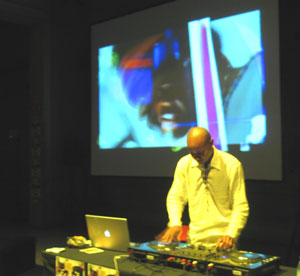
Paul Miller aka Dj Spooky that subliminal kid

Paul Miller aka Dj Spooky that subliminal kid

Paul Miller no es sólo un dj, también escribe libros. En la tercera edición de The Influencers, nos contó su versión de la cultura del collage y el corta y pega como expresión de un lenguaje global en el que la estética industrial se refleja en todos los campos de la sociedad contemporánea, desde los paisajes urbanos hasta el hip-hop.

"Today, the voice you speak with may not be your own"

Puedes leer algunas críticas a su libro Rhythm Science en su web.

Y escuchar la entrevista que le hicimos aqui.

The influencers | acción mediática y entretenimiento radical

The influencers &#124; acción mediática y entretenimiento radical

¿Qué tienen que ver un clásico del net art como Vuk Cosik, Dj Spooky o las Chicks on Speed con un grupo de eslovenos de estética totalitaria o un taxista argentino que interviene en el entorno visual de su ciudad?

Bienvenidas al tercer episodio de la serie The Influencers: trampas mediáticas, estrellas de la remezcla, sabotadores de categorías académicas y todo tipo de provocadores de la realidad.

Vuk Cosic
Paul D. Miller / DJ Spooky
Molleindustria
Irwin / NSK
Vincenzo Sparagna
Oscar Brahim
Chicks on Speed
 
del 6 al 8 de julio gratis en el cccb de barcelona >> programa completo en la web
 
audio entrevista con vani, uno de los culpables >> aqui
en los próximos días, más audios con algunos de los protagonistas de esta tercera edición.

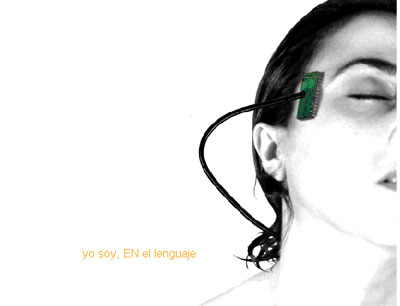
La srta cyborg al habla

La srta cyborg al habla

Name: Srta. Cyborg
Measures: 90x60x90 cm
Height: 175 cm
Model: #71070A2005 (prototype)
Implemented by AFWC
Origin: Unknown
Mutation: First evolutionary bio-robot

"Mi peor escándalo en vida sobre la Tierra fue cuando el Media Lab Europe, la rama europea del MIT, cerró por falta de financiación.
No podía creerlo. No podía creer que Nos hicieran eso. El Media Lab Europe y especialmente algunos de sus últimos proyectos como Liminal Devices de Rebecca Allen, habían permitido intuir no solo nuevas formas de interacción cuerpo-máquina persona a persona (p.e. un prototipo de Ipod, que permitía audiocasting inalámbrico usuario a usuario) sino que habían supuesto sobretodo un irreversible avance por lo que respecta a modalidades de integración cuerpo-maquina vía bio-sensores. Algo que había puesto las bases para el desarrollo de Nuestro Prototipo. (Para otros Ipod alternativos, mientras este cerrado el MLE, puedes visitar el proyecto Bussines 2.0 de Robert Brunner, ex-diseñador de la linea Powerbook).
El primer prototipo de robot-mujer bio-evolutivo desarrollado en Dublín suponía la forma más avanzada de integración de la tecnología digital con el cuerpo humano. Muy pocas Mujeres nos habíamos prestado a tal experimentación (¡no todo el mundo es capaz de dejarse meter un chip en el cuerpo, y menos un microprocesador entero!). Los primeros y más primitivos experimentos se habían realizado con perros -¡con mi perro!- (chips de detección de identidad) pero desvinculados de todo mecanismo de bio-sensorialización.
El auge del Cáncer de Pecho había aumentado el número de mujeres sensibles o potencialmente candidatas a la invasión corporal masiva."


Femact

Encuentro internacional sobre activismoS y feminismoS
Barcelona, 8 y 9 de julio de 2006 
http://www.femact.org 

El feminismo, ¿está obsoleto o está siendo reinventado? Hoy en día, los compromisos feministas y los enfoques sensibles al género han proliferado en un amplio espectro de disciplinas y movimientos. La desterritorialización y relocalización de las prácticas y discursos feministas en contextos múltiples y heterogéneos pide una reevaluación del impacto (visible e invisible) del feminismo en diferentes áreas de la praxis social y de las posibilidades para reimaginar la política feminista como un movimiento emergente en las dinámicas del cambio social.

Talleres propuestos:
Género: Imagen, Medios y Tecnologias- Taller 1
Género y Violencia- Taller 2
Activismo Queer, porno feminismo, trabajo sexual - Taller 3
Precariedad y Migración: ¿Un nuevo terreno común? - Taller 4
¿Enlaces peligrosos? Relaciones entre activismo, feminismo y mujeres - Taller 5
Historia, exclusión y estrategias contra-hegemónicas - Taller 6

Fada'íat 2006 en las fronteras internas de la metrópolis

20- 25 de junio 2006 | barcelona | programa completo

video streming >> http://giss.hackitectura.net/fadaiat

canal irc >> http://irc.23.cc #giss

El encuentro Fada'íat: por la libertad de movimiento, libertad de conocimiento, que ha tenido lugar durante sus dos primeras ediciones en el Estrecho de Gibraltar, se desplaza este año a las fronteras interiores de la metrópolis. Se celebra coincidiendo con el solsticio de verano, los días previos a la II Caravana Europea por la libertad de movimiento.

Fadaiat ha sido sobre todo un encuentro de reflexión, un laboratorio de experimentación y un espacio de celebración de los movimientos en el estrecho. Hablamos de fadaiat como un dispositivo de comunicación que cataliza procesos diversos para trazar trayectorias comunes desde grupos y personas que son interpelados al hablar de nuevos derechos en torno a la libertad de movimiento y libertad de conocimiento.

El encuentro de este año tendrá lugar principalmente en el entorno de los espacios creativos amenezados de Poble Nou, un barrio que viene sufriendo un severo proceso de gentricación los últimos años. Desde Can Ricart, uno de estos espacios, se realizó un intento de conexión con la playa de Tarifa en la noche de San Juan de la primera edición del evento en el 2004. Esta voluntad de conectar espacios, desde la fronteras exteriores o interiores ha sido elemento intrínseco de la experimentación y del caminar de Fadaiat.

Fadaiat juntará a artistas, activistas y ciudadanos durante cinco dias de programación con proyecciones, streams, charlas y acciones. Todo emitido por internet en tiempo real.


Sonar 2006 Sonarmática

Sonar 2006 Sonarmática

Cobertura Xpecial Sónar 2006 en Radio Paca ::: senyal inteligent

consulta nuestro blog:: radio paca en el sonar más audios, más fotos...

programa en directo PRONTO entrevistas, musica, etc...

ya te puedes descargar algunos audios de entrevistas aqui mismo


ALWAYS ON es la parte expositiva del Sonar, una muestra dedicada a la cultura móvil y los proyectos de localización >> programa


Blast Theory - Day of the Figurines


"Day of the Figurines" representa una ciudad ficticia, sucia, oscura y en constante declive. El juego se desarrolla a lo largo de los 3 días del festival, cada uno de los cuales representa una hora de vida en la ciudad, y su actividad va de lo mundano a lo catastrófico. La manera en que los jugadores responden a los diversos eventos y su relación con otros usuarios, da lugar a la comunidad que sustenta ese día de vida en la ciudad a través de mensajes de SMS. “Day Of The Figurines” permite la participación simultánea de hasta 900 visitantes del festival durante tres días.


Michelle Teran - Life: A User's Manual

Michelle Teran explora la interrelación entre las redes sociales y tecnológicas en entornos urbanos a través de performances, instalaciones y obras para la Red. "Life: A User's Manual" es una serie de performances públicas y ejercicios de “mapeo” online que ponen de manifiesto las historias ocultas capturadas por emisiones wireless de circuitos cerrados de televisión, así como la interacción de estos con el mundo que nos rodea. El título "Life: A User's Manual" proviene de una novela homónima de Georges Perec. Diversos paseos, encabezados por la propia artista y programados durante los tres días del festival permiten al visitante conocer una Barcelona oculta.


Antoni Abad - Zexe.net


17 taxistas, 41 gitanos y 10 prostitutas recorren espacios públicos y privados de sus ciudades, provistos de teléfonos móviles con cámara integrada. Por medio de mensajes multimedia y de conversaciones telefónicas coordinan la publicación en tiempo real en Internet, de los canales audiovisuales previamente acordados. Situados en la confluencia de las redes Internet y móvil, estos dispositivos proponen un espacio público digital, donde los emisores recopilan e intercambian experiencias y opiniones, constituyéndose en cronistas de su propia realidad. Un proyecto de comunicación móvil audiovisual para colectivos sin presencia activa en los medios de comunicación preponderantes.
Un proyecto de Antoni Abad con programación de Eugenio Tisselli. Organización y patrocinio de los proyectos Centro Cultural de España, Centro Multimedia y Fundación Telefónica de México; Centre d'Art La Panera de Lleida y Nokia España; Museo de Arte Contemporáneo de Castilla y León: La Casa Encendida de Madrid.

escucha la entrevista a antoni abad en archive.org


Jens Brand - gPod / G-Player


Jens Brand nació en Dortmund en 1968 y en la actualidad vive y trabaja en Colonia. "G-Player" (o "Global Player") funciona como un reproductor de CDs, pero en vez de CDs, reproduce el globo terráqueo. "Global Player" determina la posición actual de unos 1000 satélites y visualiza sus trayectorias orbitales. Se analiza el perfil topográfico de la región que está sobrevolando un satélite concreto, y "G-Player" transforma sus datos en sonido. Los océanos equivalen a silencio, los terrenos planos producen altas frecuencias, y las zonas montañosas, tonos bajos.

escucha cómo suena el planeta con G-pod


ARTE DIGITAL A LA CARTA >>> programa

Please, Sit Back, Watch and Listen


No es cine, no es video, no es net-art...Una selección de obras que exploran la imagen en movimiento, la narratividad y los nuevos medios. Comisariada por a minima::

escucha la entrevista a minima:: en archive.org


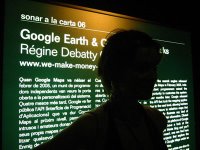
Régine Debatty
Google Earth & Google Maps Hacks
www.we-make-money-not-art.com


Régine ha seleccionado algunos proyectos que hackean las herramientas Google Earth y Google Maps, dándoles usos distintos de aquellos para os que han sido diseñadas. Localizaciones de cafés independientes cerca de cada starbucks , mapas de cosas que la gente ha tirado a la basura y puedes recuperar...

escucha la entrevista a régine debatty


Play Room Girl :: Hemos tomado la radio


PLAY ROOM GIRL es la casa de las chicas de Radio Paca en el Centro de Arte Santa Mónica de Barcelona. Un espacio sonoro de diversión, experimentación y erotismo high-tech.

En la cocina, conjuros tecnológicos (ingredientes: gases, ganas, cables). Se admiten todos los niveles. Carcajadas impronunciables. Erupto-art. Carrera de clítoris.

En la sala de estar y politiquear, el velatorio y las fotos de las abuelas. Lista de errores y tareas que no haremos. Suicidarnos por amor no entra en nuestros planes. No eres una invitada, eres la presidenta.

En el garaje, la guitarra que le regalaron a mi hermano. Pero la que sabe tocar soy yo. Plató, luces, karaoke. Si prefieres dormir, nos da igual. Nos concedes este baile. Se prohibe regalar flores.

PLAY ROOM GIRL es para todos los públicos.

Hemos tomado la radio >>> AUDIO CLIP PRESENTACION Cuidado, no todo lo que escuchas es lo que parece.

más audios ::::::::::::::::::::::::::::::::::::::::::::::: 

Emisión RadioPaca en Radio4-RNE   07/06/2006

Emisión RadioPaca en Radio4-RNE   14/06/2006

Emisión RadioPaca en Radio4-RNE   21/06/2006

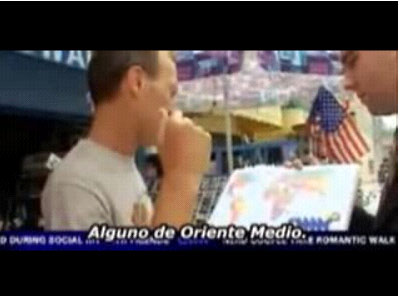
La próxima invasión ?¡

La próxima invasión ?¡

Copiado de Disculpen las molestias a través de Escolar.net
El topico de que los americanos no saben dónde está...nada, para reir y llorar. 

mira el video aqui. 

Equilibrios inestables

Equilibrios inestables

Equilibrios Inestables desde mercegalan.com

A partir de la importancia que tienen las redes de mujeres, he articulado unas piezas audiovisuales que he situado en distintos Nodos de una red simbólica que representa la Internet. Los Nodos son fragmentos que intentan reconstruir una unidad compleja y diversa. Algunos de ellos, son piezas narrativas de video y audio, que invitan al internauta a la reflexión.
Este proyecto artístico, gira en torno a la construcción de lo corporal y a la violencia que se ejerce sobre él, desde las distintas instituciones patriarcales. Para poder actuar sobre la violencia, se hace necesario visibilizarla y buscar estrategias para combatir esos discursos, que se inscriben en el espacio corporal, en el espacio de lo privado y en la distribución del espacio público, por género y por orientación sexual.


entra en Equilibrios Intestables >>> la red se extiende si tú participas en ella

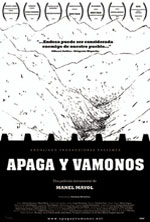
Apaga y vamonos

Este documental de Manel Mayol trata sobre la inundación de una parte de las tierras de los mapuches en Chile por la compañía multinacional Endesa , responsable de la construcción de Ralco, la tercera presa hidroeléctrica del mundo en el río Biobío.

Un nuevo capítulo de "Cultura y Capital, la extraña pareja" ....

Desde http://www.radio.cz :

Manel Mayol viajó en 2004 a Chile para rodar su película "Apaga y vámonos" sobre la megacentral hidroeléctrica Ralco, construida por la empresa española Endesa sobre miles de hectáreas de territorio poblado por el pueblo indígena mapuche -pehuenche.

El director explicó que en 2004 se celebró en Barcelona el Forum de las Culturas, la Paz y la Diversidad, evento patrocinado por grandes empresas.
"Endesa hablaba, por ejemplo, de la energía verde y el desarrollo sostenible. En Barcelona hubo bastante resistencia, porque se trataba de un cinismo por parte de las grandes empresas patrocinar un evento como éste. Estábamos preparando otro proyecto con el productor Esteban Bernatas, pero nos dimos cuenta de que hablamos más sobre el Forum que de nuestro proyecto. Así que decidimos dedicarnos a algo que explicara un poco el cinismo de estas grandes compañías. Y casualmente, en ese tiempo Endesa cerró las compuertas del lago para llenar el valle del Ralco".
Según Manel Mayol, el pueblo mapuche es fuerte. Ha resistido a todas las invasiones: desde los Incas hasta los españoles.
"Pero debo decir que cuando subimos al barco donde ahora está el lago formado por Endesa fue, realmente, bastante duro. Me costó bastante entrevistar a esta gente porque me daba cuenta de que la situación es para ellos gravísima. Y no podía decirles que servía para hacer un documental porque en realidad a ellos no les sirve para nada".
La canción "Río Abajo" que acompaña a las imágenes del documental dice: "Quiero ver fluir nuestros ríos sureños, no pongas tus cristianas manos en lo más sagrado que tenemos".
 
entrevista con el director y el productor

apuntes sobre el conflicto y la película
http://www.radionizkor.org/chile/endesa.mp3

web oficial del documental
http://www.apagayvamonos.net/


Donna Haraway

Donna Haraway

Encuentros entre especies: el feminismo tras los cyborgs

Desde w3art ::::::::::::::::::::::

La década de los noventa representó una eclosión de discursos críticos sobre la construcción del género, la sexualidad y la raza. Donna Haraway, una de las figuras más originales y controvertidas en el campo de los estudios culturales, de la ciencia y la tecnología, utiliza la metáfora del cyborg (nombre dado en 1960 por Mandred Clynes a una rata de laboratorio a la que se le había implantado un sistema de control cibernético) para indicar que nuestros cuerpos y nuestras identidades —de género, de sexualidad y de raza—, son productos de complejas tecnologías biopolíticas. Las criaturas posmodernas somos sistemas culturales tecnovivos. La etapa del posfordismo a la que hacen referencia Antonio Negri y Paolo Virno señala el paso de una sociedad industrial sexo-orgánica a un sistema de información de género prostético y polimorfo.


Haraway denomina informática de la dominación la situación actual de las minorías sexuales y culturales frente a la creciente globalización de los sistemas de producción y reproducción del género, la sexualidad y la raza.

Haraway es autora del Cyborg Manifesto y de una larga bibliografía que parte del análisis de las metáforas utilizadas en la ciencia y del modo en que estas metáforas determinan sutilmente las redes de poder que controlan el mundo. Su trabajo abarca desde la primatología hasta la epistemología; desde la investigación sobre el cáncer hasta la tecnología de la información. Doctora en biología y profesora de teoría del feminismo y tecnociencia, es conocida por sus relevantes aportaciones en campos tan diversos como los estudios culturales, la teoría política, la primatología, la literatura y la filosofía.

22 - 23 - 24 de mayo de 2006
Conferencia pública y seminario
MACBA Barcelona

www.macba.es

Desde Indymedia Barcelona:::::::::::::::::::: Dones a l’univers científicotecnològic !!! muchos linx tira del hilo ¡¡¡¡¡

com ha anat...i com va...Les dones i les TIC ::: Mileva Maric, l’altra cara d’Einstein ::: aquesta feina no és per dones??? ::: dones matemàtiques: no n’hi ha o no hi ha consciència de que n’hi ha? ::: dones i "feines d’homes" ::: teletreball: una mirada des de la perspectiva de gènere ::: dones i ciència ficció ::: dones i multinacionals: manar o no manar? ::: dones, ciència i investigació ::: Les dones i el software lliure: xerrada chicas linux::: dones i software lliure: anàlisi ::: assetjament sexual a cercleweb
experiències actuals: web radio: neix radio paca ::: psicosoma factory:dones dj’s a bcn ::: fotos taller de genderchangers al FSE Londres ::: audios de les xerrades dels Iers jocs fractals de gràcia: dones i tecnologies ::: xerrades jocs fractals ::: jocs fractals 2005 ::: manifiesto de la zorra/mutante chicas linux ::: Barbara Thoens: hackejar és política ::: cròniques del taller caneluntu:::kaoXX:::la bugslab
reflexions:l’autogestió del cos:::tecnoalliberament ::: manifest ciberfeminista per el segle XXI ::: On es troba el feminisme en el ciberfeminisme? ::: les tecnologies de la identitat ::: ciberfeminisme: la reinvenció del cos ::: Transformaciones tecnocientífiques de cossos, sexes i gèneres: reptes des del feminisme ::: links tema gènere i dones ::: reinventant l’espai :::
:::


Intervenciones Tv

Experiencias alternativas en televisión | Fundación Rodriguez

El proyecto "Intervenciones TV" propone el medio televisivo y la televisión en internet como soporte para propuestas de creación audiovisual. Reflexión sobre el lenguaje televisivo, píldoras de carácter publicitario ó experimental, cuestionamiento del medio y de su mensaje, insertos por sorpresa en la programación, en la red, en la pantalla.

Videos

netznetz

Erase una vez la escena....

Netznetz es una plataforma creada por los grupos e individuos asociados con el net art y la net cultura de Viena que han decidido crear un software para distribuir las subvenciones que la ciudad concede a esta escena emergente. De este modo, la concesión de subvenciones es auto-gestionada por sus destinatarios mediante un procedimiento democrático y colaborativo.

El 50% de las ayudas se destinan a infraestructura, newbies y gastos comunes
El otro 50% se destina a  la financiación de los grupos de netznetz, elegidos en base a su reputación.

La web de netznetz es un espacio de trabajo abierto en forma de wiki y el software se llama Mana.

(...claro que en Viena no se cuelan ni en el metro.... ;-) 


deleteTheBorder.org

towards a global network of movements against borders >> http://deletetheborder.org

Una Red Norteamericana que dice No a las Fronteras


Por medio de nuestro trabajo hemos conocido algunas / os hermanas y hermanos en la lucha en México, Canadá, los Estados Unidos y por todo el mundo. Hemos comenzado a aprender acerca de uno y el otro y como resultado, aprendido mas acerca de otros grupos y luchas surgiendo de lo que nosotros creemos ser causas similares y relacionadas...

Entonces, proponemos la creación de una red activista en contra de las fronteras entre grupos en México, Canadá y los Estados Unidos. Hemos tomado solo algunos pocos pasos hacia la realización de esta red. Esto es obviamente un esfuerzo grandísimo y complejo. Entonces nuestra meta es presentar bastante información tangible para que muchos aspectos puedan ser desarrollados de manera más colectiva y orgánica...

Cuntstunt

Cuntstunt es un fanzine de chicas sobre feminismo, anarquismo, historia, música, vida y sexualidad.

En la web hay mogollón de linx y posibilidad de descargarselo en pdf.

Euromayday 2006

Contra la precariedad del trabajo y la vivienda

Por la libre circulación de las personas y el cierre de los centros de internamiento para inmigrantes

Contra el sometimiento de la cultura a la economía de mercado

Por la libre circulación del conocimiento y la información 

Euromayday.org >>> 1 de mayo 2006 

En el MayDay nos manifestaremos y protestaremos contra la precariedad, la cuestión social seguramente más crucial y explosiva en la Europa de hoy, como demuestran las gigantescas manifestaciones que una entera generación está llevando a cabo en Francia contra el CPE. La precariedad es una extendidísima condición de nuestro trabajo y también de nuestra vida, una condición vivida por millones de residentes en Europa.

Exigimos igualdad social para todas las personas, el fin de la precarización laboral y de todas las formas de explotación flexible, impuestas durante dos décadas de desregulación del mercado de trabajo que han provocado un tipo de pobreza difusa y que NO han reducido el desempleo. Exigimos LIBERTAD DE MOVIMIENTO para todos las personas migrantes y UNA GARANTÍA DE INGRESOS PARA TODAS LAS PERSONAS, como pasos fundamentales encaminados a construir una verdadera europa social. Luchamos por garantizar un acceso generalizado a la vivienda y a la movilidad, una cultura y una información libres, disponibles y compartibles para todo el mundo. Practicamos la libertad de expresión y de disensión, participamos en conflictos sociales y laborales, construimos medios de comunicación que desenmascaran la versión de la realidad patrocinada por las grandes empresas y los estados.